Dimag Me Bhukh

Understanding Sparrows. Protecting Their Future.

A hunger to understand nature. A commitment to protect it.

Dimag Me Bhukh is built on three years of living closely alongside house sparrows in a bird-friendly home, and a simple belief: saving them is about understanding their lives, not just giving them a nest.

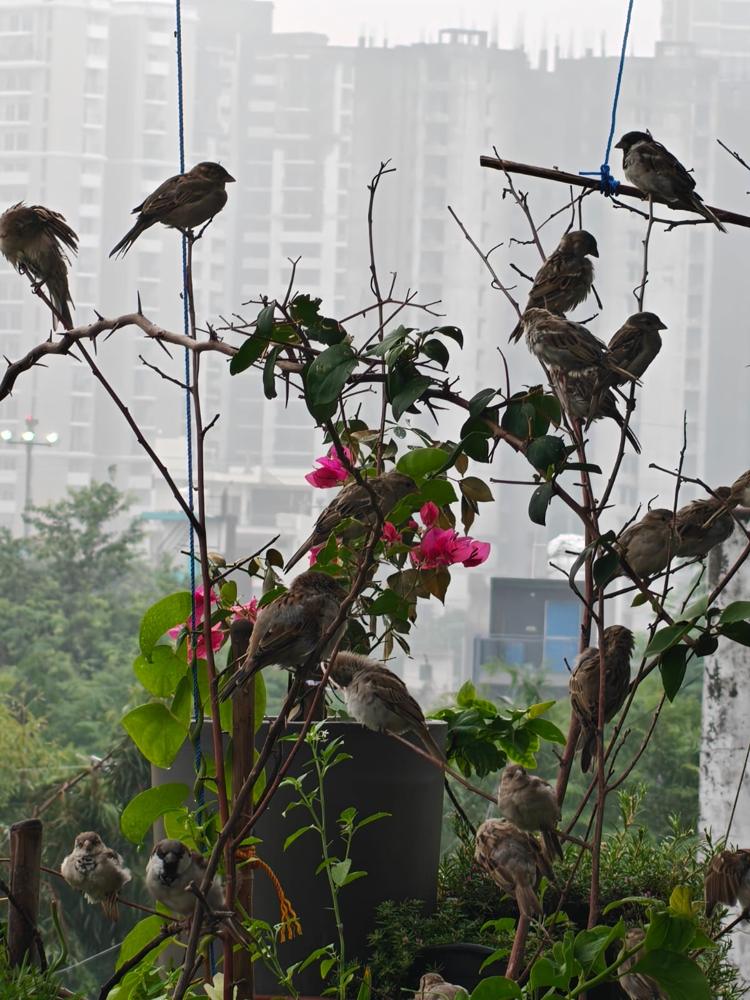
A flock of sparrows on a flowering shrub in the balcony garden

Latest Updates

The newest video from my YouTube channel. It updates by itself whenever I upload a new one.

Latest from the Blog

Notes, observations and guides from three years of living with sparrows.

My first blog posts are on the way: notes on sparrow food, nests, chicks and everyday life. Follow along to hear when they are out.

About

The name Dimag Me Bhukh means “hunger in the mind”: a hunger to understand nature. It is also written Dimaag Me Bhukh, Dimag Mein Bhukh or Dimag Me Bhookh.

A hunger to understand nature. A commitment to protect it.

At Dimag Me Bhukh, my focus is not simply on installing nests for sparrows. It is on protecting the lives that begin inside those nests.

Providing a nesting space is only the beginning. Once sparrow chicks arrive, they need a safe environment, the right food, clean water, protection from threats, and an understanding of their natural behaviour. If we want sparrows to thrive and become part of our future generations, we must learn how to care for them—not just invite them into our homes.

My name is Akanksha Gupta, and for the past three years, I have had the privilege of living closely alongside sparrows under the same roof. I have observed their lives every day—from the moment they wake up in the morning to the time they settle down for the night.

I have closely observed when they arrive and leave, what they eat, what they need, how they behave, how they raise their young, what works for them, and what can actually harm them. Along the way, I have also explored and observed the truth behind many common myths and facts about sparrows.

Everything I share through Dimag Me Bhukh comes from my personal experiences, observations, and three years of living closely with these beautiful little birds.

My hope is that by sharing what I have learned, I can help more people understand sparrows—not just feed them, but create safer and more meaningful spaces for them to live, breed, and thrive.

Because saving sparrows is not just about giving them a nest.
It is about understanding their lives and protecting their future.

Thank you for being here and for caring about nature.

With gratitude,Akanksha GuptaFounder, Dimag Me Bhukh
My 3-Year Sparrow Journey

How living under the same roof as sparrows changed the way I understand them.

  1. How it started

    Three years ago we moved into a house in Greater Noida. At first I did not like it at all. The house was nothing special, there was not even a proper cupboard, and the washrooms were in poor shape. I only stayed because we had no other choice. But I had many plants, and I had loved feeding birds since childhood, so I began keeping grains in my balcony and garden area.

  2. First nest

    One day two sparrows came to eat the grain. Slowly there were more, and then different kinds of birds started to visit. When breeding season was near, the sparrows began carrying twigs to the false ceiling inside my house. The moment they came indoors, we switched our fans off for good. Before long they had built six nests, and six pairs were living in the house.

  3. First chicks

    In one breeding season a single couple raised chicks up to six times, each time at least four and sometimes six. By my count, more than 400 chicks have hatched in my home over three years, and the sparrows kept increasing.

  4. What I learned

    Sparrows stayed and grew in number because they found food, water and safety. With more than 1,000 plants there were plenty of insects to eat. I never used fertiliser or pesticide on my plants, so the sparrows had a natural environment and the insects they found were healthy. A good habitat, not just a nest, is what made them choose my home for breeding.

  5. Discoveries

    I found that sparrows eat cooked food well: poha, vermicelli, dal-rice, khichdi, roti and rice. Broken rice became their favourite grain. I watched their numbers rise day by day, and in three years I did not see them sick or dying. I also found that two common myths, about rice and about touching baby birds, did not hold true in my home. You can read them in Myths vs Facts.

  6. Where I am today

    Humans and birds now live together like a family. Doors and windows stay open day and night so the birds can come and go as they like. Hundreds of sparrows spend the day in my plants, and some sleep there at night. I am sure coexistence is possible, and I want to help more people see it.

What I Have Observed

“These are observations collected from three years of living alongside sparrows—not theories from a distance.”

They eat cooked food too

Besides the dry grains I keep out, my sparrows eat cooked food. I have seen them eat poha, vermicelli, dal-rice and khichdi, and sometimes they take small bites from our plates. It started with my dogs’ food: I cook for them and leave it on the kitchen table to cool, usually boiled rice or roti, and the sparrows began eating it.

Broken rice is their favourite

I have kept bajra, kangni, jowar, daliya and more, but they eat broken rice the most, and the flock keeps growing. About one sack of rice comes into my home every month for the sparrows.

Food that is always there

I keep many kinds of grain out all day and night, and I refill before the bowls are empty. I never let them run out.

Breeding

One couple bred up to six times in a single breeding season, each time with at least four chicks and sometimes six. By my count, more than 400 chicks have hatched in my home in three years.

What the parents feed their chicks

Along with insects, I have personally observed sparrows feeding their chicks and eating soft foods such as cooked rice, soft roti, cooked daliya and even small pieces of dough. As the chicks grow, their diet gradually changes and includes more seeds and grains.

In three years I have watched many broods grow, develop feathers and eventually leave their nests. I have seen chicks grow healthy and strong in an environment where their parents had access to insects, grains and the soft cooked foods I offered.

These foods were part of the feeding environment in which many chicks in my home grew successfully. However, this does not establish that these foods alone meet every chick’s nutritional needs. Insects and other suitable natural prey remain especially important for growing sparrows.

Healthy and growing

In three years I have watched their numbers rise day by day. I have not seen them sick, and I have not seen them dying.

Trust

I never chase or catch them. They sit on lights, photo frames, the TV, wires and indoor plants, play, squabble and chirp all day, and the chirping gives me peace. A few chicks have come very close to my son and to me. We did not disturb them, and we only pick a bird up when it has to be rescued. The trust grew on both sides.

A home outside breeding season too

When breeding season is over, sparrows still use the house as a resting place. Some couples come indoors to eat even when plenty of food is kept outside.

At my dining table

When I sit down to eat, the sparrows know. They come to their own table to eat with me, even when I am only drinking tea. It feels as if their hunger wakes up with mine.

Plants and shelter

I added more greenery, indoors and outdoors. Thorny outdoor plants, bougainvillea, a ber tree, lemon, babul and bushy ficus give them safe branches to rest in. A mini jungle holds hundreds of sparrows through the day, and some sleep there at night. I have more than 1,000 plants and have never used fertiliser or pesticide.

Other birds on my balcony

Rock chats, Indian robins, bulbuls, pigeons, doves, greater coucals, silverbills, silver-eyes, sunbirds, babblers, black drongos and many more visit the balcony.

The lapwing across the road

On a terrace right in front of the house a lapwing (tithari) lays four eggs each time, around three or four times in a season. I have watched her life too. She is a fearless mother: noisy through the day and night, and very protective of her chicks.

“It feels as if their hunger wakes up with mine.”Akanksha, on the sparrows who join her at the dining table

Sparrow Knowledge Hub

The educational heart of Dimag Me Bhukh. Choose a topic to begin.

How to Invite Sparrows

What worked in my home, step by step. Every home is different, so start small and be patient.

  1. Start with grain, every day

    My first two sparrows came for the grain I kept in my balcony. Keep dry grains such as bajra, kangni, jowar, daliya and broken rice. Refill before it runs out and never let it stay empty, so the birds learn that this place is reliable.

  2. Add simple cooked food, in small amounts

    My sparrows happily eat plain boiled rice, roti, poha, dal-rice, khichdi and vermicelli. Offer only fresh, simple food that is not salty, spicy, oily or spoiled, in small amounts, and clear away leftovers.

  3. Keep clean water

    Food, water and safety are what made my sparrows stay. Keep a shallow dish of clean water in a shady spot, and refresh it every day.

  4. Grow shelter

    Thorny and bushy plants make sparrows feel safe. I planted bougainvillea, a ber tree, lemon, babul and bushy ficus, indoors and outdoors. Together they became a mini jungle where hundreds rest all day and some sleep at night.

  5. Keep it chemical-free

    I have never used fertiliser or pesticide on my plants. With many plants and no chemicals, there were healthy insects for the chicks. A natural environment is a big reason sparrows chose to breed here.

  6. Offer a safe place to nest

    When the sparrows began carrying twigs into my false ceiling, I switched the fans off for good, and they built six nests. Offer a sheltered, quiet gap or a nest box, and keep fans off near any active nest.

  7. Be calm and patient

    I have never chased or tried to catch them. They can go wherever they like, and over time they learned that nobody will harm them. Trust takes time. Stay calm, watch from a distance, and let them come to you.

  8. Let them come and go

    My doors and windows stay open day and night so the birds can enter and leave by choice. If you try this, first make sure the space is safe: mark large glass, keep fans off, and keep pets supervised.

  9. Keep everyone safe and clean

    I have three dogs and a young son, and everyone lets the sparrows be. Every home is different: keep pets and children calm around birds, clean droppings regularly, wash your hands after feeding, and keep your own food covered.

This is what worked in my home over three years. It is not a guarantee, and every home and neighbourhood is different.

Sparrow-Friendly Home / Balcony

How to turn your balcony, terrace or garden into a safer space for sparrows.

🪺

Nesting spaces

Sheltered gaps or nest boxes in quiet, shaded, rain-protected spots, away from fans and constant disturbance.

🌾

Food

Simple, suitable food in small amounts in a clean container. Remove leftovers before they spoil.

💧

Water

A shallow dish in the shade, refreshed daily and washed regularly.

🌿

Plants

Dense, leafy, pesticide-free plants and shrubs for cover and insects.

🌙

Roosting spaces

Sheltered branches, ledges or thick shrubs where they can rest and spend the night.

🛡️

Safety

Keep fans off near nests, mark large clear glass, and keep the space clean and quiet.

🐾

Pigeon, cat and dog risks

Cats and dogs can harm chicks and fledglings, so keep them away from nesting areas. Larger birds can crowd feeding spots, so put food near dense cover in small portions.

🚫

Things to avoid

Pesticides, glue traps, loose netting, salty, spicy, oily or spoiled food, and disturbing nests or handling chicks.

Through the seasons

☀️

Summer

Keep water in the shade and refresh it more often. Give leafy cover from the heat.

🌧️

Monsoon

Keep nests and food dry. Wash feeders and dishes often so damp food does not spoil.

❄️

Winter

Offer resting spots sheltered from cold wind, and keep water and food clean.

Is your space sparrow-friendly?

Tick what you already do.

In Depth

Daily rhythm, behaviour, food and water, and dangers, with photos from my home.

01

Daily rhythm

Sparrows are active through the day, starting at first light, and spend the night in sheltered spots close to home. Noting when they arrive, feed, rest and leave shows what a space really offers them.

  • Watch the same spots at the same times each day.
  • Notice where they gather before settling for the night.
02

Behaviour and social life

Sparrows are social birds. They feed, rest and bathe in groups, often in dense shrubs, and are noisy and busy around shared spots. Dust bathing and splashing in shallow water are normal.

  • Dense, leafy plants give them cover to gather.
  • Watch from a distance so natural behaviour continues.
03

Food and water

House sparrows are opportunistic eaters. They commonly eat seeds and grains, and also simple household foods and insects, and their diet changes with what is available. Chicks depend heavily on insects in their early days. Fresh water is needed for drinking and bathing.

  • Offer grains and simple foods such as roti, rice, daliya or poha in small amounts.
  • Avoid food that is very salty, spicy, oily, sugary, spoiled or highly processed.
  • Refresh water daily and wash dishes and feeders often.
04

What can harm them

Common household dangers include running ceiling fans, clear glass, cats and other predators, pesticides, and dirty water or feeders. Many can be reduced before nests become active.

  • Keep fans off near active nests.
  • Mark or cover large clear glass.
  • Keep pets away from nesting areas.
  • Avoid pesticides around plants.

Sparrow Babies & Nesting

Protecting chicks is central to everything here. Understand what is happening in the nest.

What happens inside a nest?

Sparrows build a nest of coarse dried vegetation in a sheltered hole or gap, lined with finer material such as feathers, string or paper. Cornell gives a clutch of 1–8 eggs, and incubation takes about 10–14 days. Newly hatched chicks are naked, with closed eyes and bright pink skin, and depend on their parents. Timings vary. Source: Cornell Lab of Ornithology.

What do parents feed their chicks?

House sparrow parents feed their chicks mostly insects and other protein-rich foods in the first days of life, because growing chicks need plenty of protein for healthy development. As the chicks grow, their diet gradually includes more seeds and grains.

This is why a bird-friendly home needs more than a feeder. Green plants, insects, safe nesting spaces, clean water and suitable food all play a role in supporting birds and their young. See What I Have Observed for what I have seen in my own home. Cornell Lab of Ornithology also notes that sparrows feed insects to their young.

When do chicks leave the nest?

Cornell gives the nestling period as about 10–14 days. After that, fledglings leave the nest, feathered but still clumsy, and often stay near the ground or low cover while their parents keep looking after them. Source: Cornell Lab of Ornithology.

What should humans do, and not do?

Do keep pets away, stay quiet, watch from a distance, and keep clean water and leafy cover nearby. Do not open or move nests, handle chicks, run fans near nests, or feed chicks milk, bread or water by force.

When does a chick actually need help?

Many chicks seen on the ground are not abandoned. Understanding the chick’s age and condition comes first, as shown below.

Probably fine
  • Fully feathered, hopping and alert
  • Parents calling or visiting nearby
  • No injury and not in immediate danger

Watch quietly from a distance for a few hours and keep pets away. If it is in a risky spot, gently move it to a nearby shrub.

Needs help
  • Featherless or barely feathered chick out of the nest
  • Injured, bleeding or drooping wing
  • Cold, weak or lying still
  • Attacked by a cat or dog, or in danger

See Rescue & Help below.

Myths vs Facts

Common beliefs about sparrows, and what is closer to the truth.

Myth

Feeding rice to birds harms them and stops them from breeding.

Fact

In my home broken rice is the sparrows’ favourite grain, and about one sack comes in every month. They kept breeding and the flock kept growing. An Indian feeding study from Punjab also lists rice among the foods house sparrows eat. This is observation from one home, so I still offer a variety of grains, such as bajra, kangni, jowar and daliya, along with rice. I suspect the myth began because rice is human food, and people did not want it given to birds.

Myth

If a human touches a baby sparrow, its parents will reject or kill it.

Fact

I have rescued baby birds in my home many times, and each time the parents accepted them back. I think this myth exists to stop people from disturbing chicks. Very young, featherless chicks and eggs are more delicate, and touching them could make a chick ill or change an egg, so avoid handling them. I have never touched an egg, and every egg in my home hatched into a healthy chick. Wildlife groups also say that touching does not usually make parents abandon their young.

Myth

A baby sparrow found on the ground always needs rescuing.

Fact

Not every fledgling on the ground is abandoned. Understanding its age and behaviour is important before intervening. A fully feathered, alert bird that hops is often a fledgling whose parents are nearby.

Myth

Sparrows should only be given seeds and grains.

Fact

House sparrows are opportunistic eaters. They commonly eat seeds and grains, but they can also eat a variety of foods they find around human homes. Roti, cooked rice, dal-rice, daliya, poha and even vermicelli can be eaten by sparrows. Their diet naturally changes with what is available around them.

Myth

Sparrows cannot digest human food.

Fact

House sparrows have lived alongside people for centuries and are well adapted to human environments. In everyday life, they may eat small amounts of simple household foods such as roti, rice, daliya, poha or cooked grains. What matters is moderation and avoiding foods that are excessively salty, spicy, oily, sugary, spoiled or highly processed.

Myth

Sparrows only eat grain.

Fact

Their diet is more diverse than that. Adults eat seeds and grains, while insects and other soft foods can also be important—especially when raising chicks. A bird-friendly environment therefore offers more than a feeder: plants, insects, shelter and nesting spaces all matter.

Myth

Putting up a nest is enough to help sparrows.

Fact

A nest is only one part of a suitable habitat. Sparrows also need safe places to raise their young, water, natural cover, food sources and protection from hazards. Creating a bird-friendly home means thinking about the whole environment.

Myth

Sparrows leave human homes in winter.

Fact

House sparrows generally stay close to the places where they live rather than making long seasonal migrations. If a neighbourhood continues to provide suitable shelter, food, water and nesting opportunities, sparrows can remain there throughout the year.

Myth

There is one simple reason why sparrows are declining.

Fact

There isn’t one universal explanation. Loss of nesting opportunities, changes in urban habitats, reduced insect availability, pesticides and other environmental pressures can all play a role. The situation can also vary from one place to another.

Myth

Sparrows cannot live around WiFi, mobile towers and 5G.

Fact

There is no clear proof that WiFi or 5G is the main reason sparrows struggle. Some studies have looked at possible links, but the results are not conclusive. Sparrows are adaptable birds that have adjusted to human surroundings over a long time, including modern towns and cities. What they clearly need is a natural environment: nesting spaces, clean water, insects, and food that is free from pesticides and excess chemical fertiliser.

From our observation
Myth

Sparrows need a special diet to live around humans.

Fact

Look closely at a sparrow’s real life. They are incredibly adaptable birds. In homes where they have lived alongside people for generations, they may eat whatever simple, suitable food is available—from grains and seeds to roti, rice, daliya, poha and other cooked foods.

What we should focus on is not “Never let a sparrow eat human food,” but “Don’t make unsuitable processed food their regular diet.”

This comes from observation at Akanksha’s home. It shows what happens in one particular environment; it is not proof that every human food is safe for every sparrow.

Proof and sources

Each claim on this page is listed here with what the sources say, in our own words, and a link so you can read them yourself. Some sources are from other countries. Indian sources are marked (India).

Sparrows eat more than seeds and grain.

Cornell says house sparrows eat mostly grains and seeds, plus livestock feed and, in cities, discarded food, and that in summer they eat insects and feed them to their young. A feeding study of house sparrows in Punjab, India, recorded wheat, pearl millet, rice, other grains, weeds, insects and kitchen scraps in their diet.

Simple cooked household food can be part of a sparrow’s diet, in small amounts.

Cornell lists discarded food among what city sparrows eat, and the Punjab study lists kitchen scraps. A UK farmland guide describes a varied diet. This shows they are flexible eaters. It does not show that every food is healthy, which is why our advice is small amounts of simple food and avoiding salty, spicy, oily, sugary, spoiled or processed items.

Chicks depend on insects, so plants and pesticide-free spaces matter.

Cornell says sparrows feed insects to their young in summer. A wildlife guide describes breeding sparrows catching insects, larvae and caterpillars for their chicks, and lists insecticide use and falling invertebrate numbers among the main threats. India Together makes the same point about pesticides and nestling food.

Nesting gaps and cavities matter.

Cornell says house sparrows nest in holes in buildings and other structures, build nests of coarse dried vegetation lined with feathers, string or paper, and often reuse nests. A European guide lists the loss of cavities in renovated buildings among the threats, and a UK guide says they favour small holes and crevices and will also use nest boxes.

There is no single reason for the decline.

Cornell cites a North American survey showing a cumulative decline of nearly 80% between 1966 and 2019, links recent declines to the industrialisation of farming, and still rates the species as low concern globally. A 2024 study in Gujarat, India, notes that conclusive evidence for any one cause is still lacking, and a wildlife guide lists several pressures together: intensive farming, insecticides, fewer wild seeds, lost cavities, fewer invertebrates and urban pollution.

WiFi, mobile towers and 5G are not proven to be the cause.

Studies in Belgium and Spain found fewer sparrows where signals from mobile phone base stations were stronger. These show a link between two things, not proof of cause. A 2022 study in Guwahati describes the results so far as inconclusive, and India Together says there is no scientific proof in India that towers are a factor. We did not find studies that tested WiFi or 5G on sparrows directly.

A baby bird on the ground does not always need rescuing, and touching it does not make its parents abandon it.

The Wildlife Trusts say fledglings often spend a few days on the ground with their parents nearby, that touched chicks are not abandoned, and that they should be left alone unless in immediate danger. Tufts University’s wildlife clinic advises returning a nestling to its nest if it can be found, and leaving a healthy fledgling alone. For an injured bird, contact a local wildlife rescue.

General reading: Cornell news on sparrow decline · Nature Forever Society (India) · World Sparrow Day.

These summaries are not a substitute for the sources, and the observations on this site come from Akanksha’s own home.

Rescue & Help

Found an injured or baby bird? Stay calm, observe first, then decide.

When to step in

The bird is injured, bleeding or has a drooping wing, was attacked by a cat or dog, is in danger such as on a road, is a featherless chick out of its nest, or is cold, weak and lying still.

When not to interfere

A fully feathered, hopping and alert fledgling with parents nearby usually does not need rescuing. Watch from a distance for a few hours and keep pets away.

Keeping an injured bird safe

Place it in a small cardboard box with air holes and a soft cloth, in a warm, dark, quiet room away from pets and children. Handle it as little as possible. Do not force food or water.

Finding help

Contact a local wildlife rescue group, bird rescue volunteers or an avian or wildlife vet. In many places a state forest department wildlife helpline is also available.

Why proper treatment matters

Birds hide illness and can decline quickly. Wrong food, water or handling can cause stress or harm. Trained rehabilitators know the right care, medicines and safe release.

Dimag Me Bhukh is an awareness and observation project. It is not a veterinary or rescue service, and this guidance does not replace advice from a qualified professional.

Stories from My Sparrow Family

Moments from everyday life with the sparrows who share my home.

🪺

When the fans went off

When the sparrows started carrying twigs to the false ceiling inside my house, I knew what I had to do: we switched our fans off for good. Slowly, one pair after another built nests. Before long there were six nests and six pairs living inside our home.

🍵

At my dining table

Whenever I sit down to eat, the sparrows seem to know. They arrive at their own table to eat with me, and even when I am only sipping tea, they start eating. It feels as if their hunger wakes up with mine. I love having them with me.

🐕

Dogs, a child and sparrows

We have three dogs and a young son at home, and nobody disturbs the sparrows. It began with the dogs’ food. I cook for them and put it on the kitchen table to cool, and the sparrows started eating it. Today they live with us like family.

🥚

The mother across the road

On a terrace right in front of our house, a lapwing lays four eggs each time, around three or four times in a season. I have watched her life too. She is a fearless mother, loud day and night, and fiercely protective of her chicks.

Dimag Me Bhukh on Social Media

Follow the everyday lives of the sparrows I share my home with.

Share Your Idea

Have an idea to help sparrows, a question, an observation or a story? Email it to us.

This opens your email app with your message ready. Press Send there to finish.

How it works

  1. Write your idea and tap Send by Email.
  2. Your email app opens with the message filled in.
  3. Press Send. It goes to dimagmebhukh@gmail.com.

Found an injured or baby bird? Please contact a local wildlife rescue straight away instead of waiting for an email reply.

Contact

Want to ask something about sparrows? Have an observation or story to share? Get in touch.